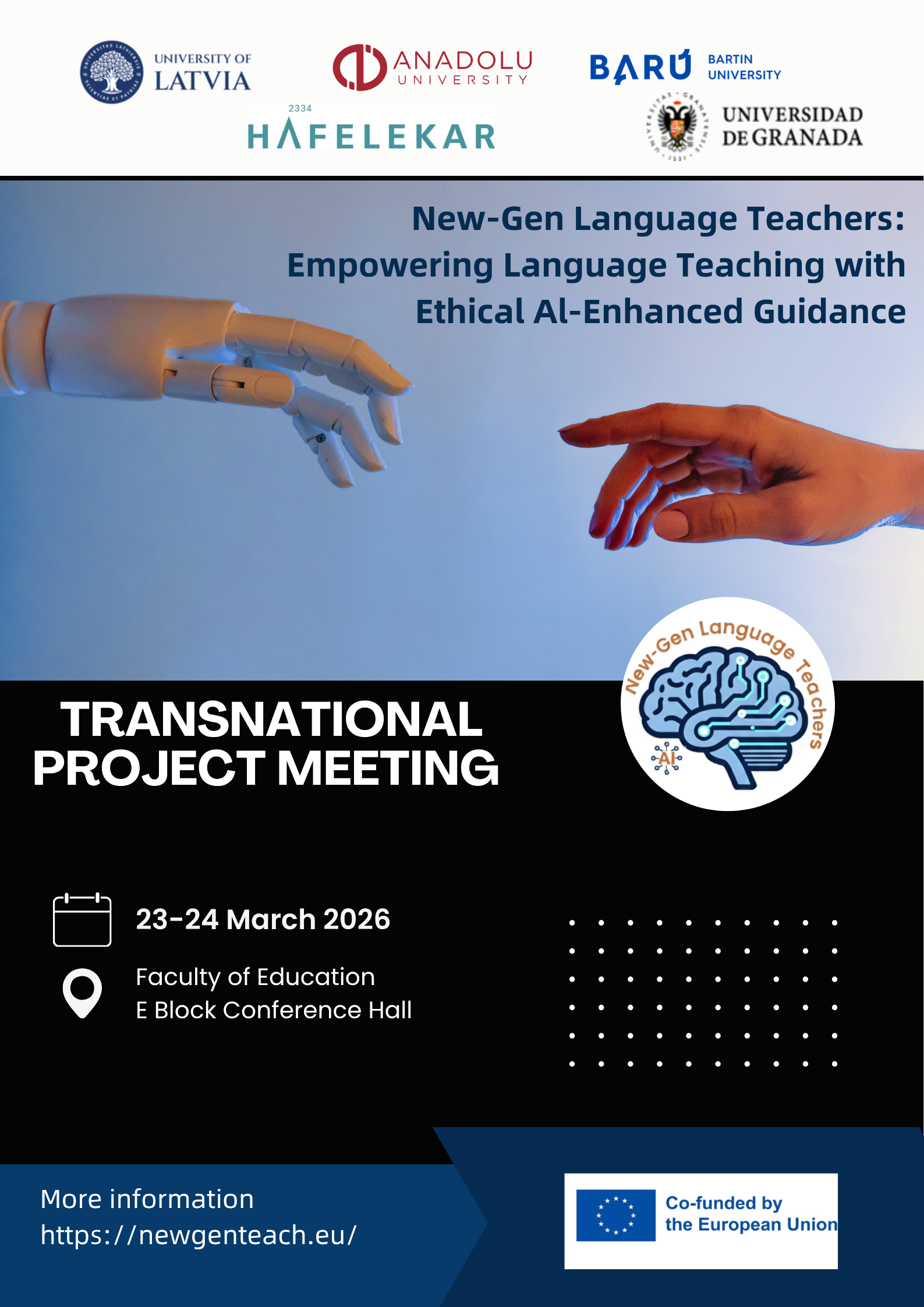
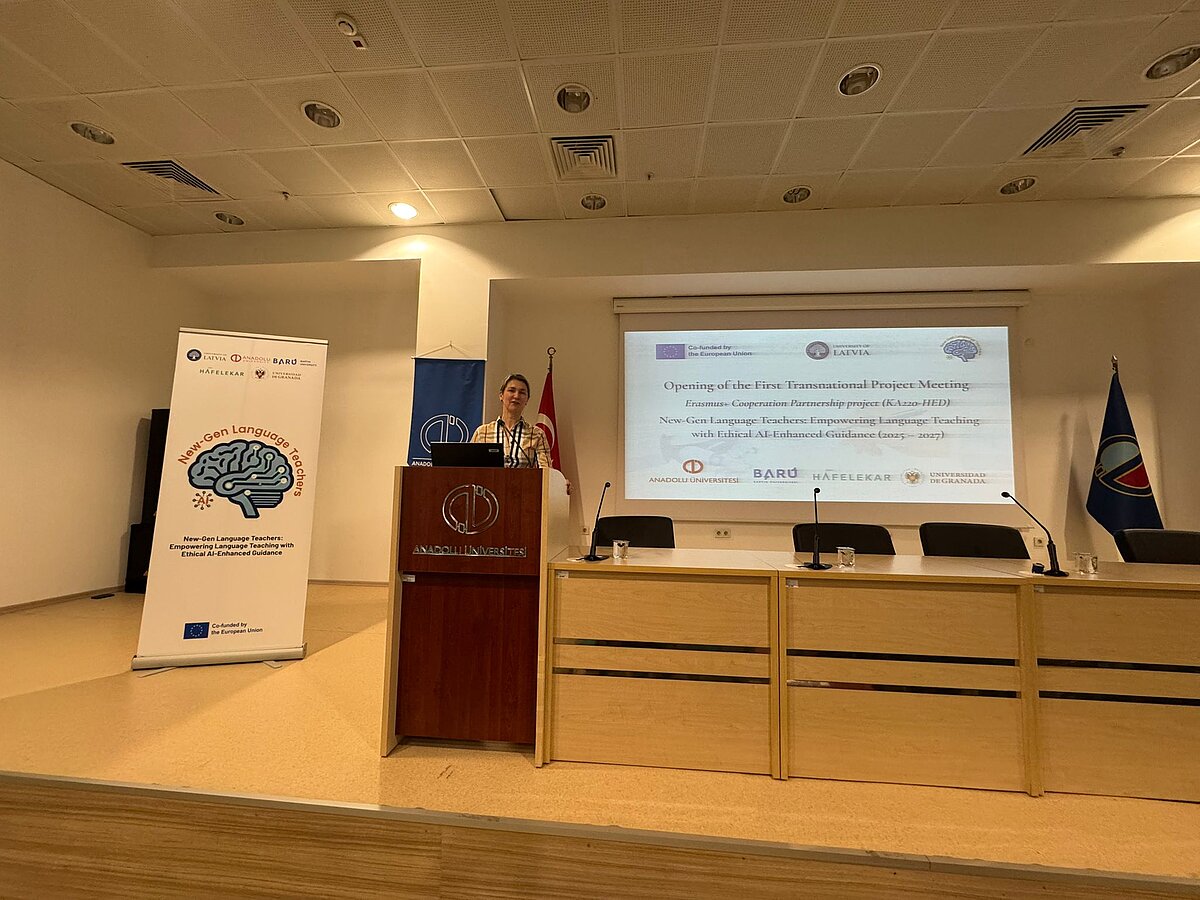
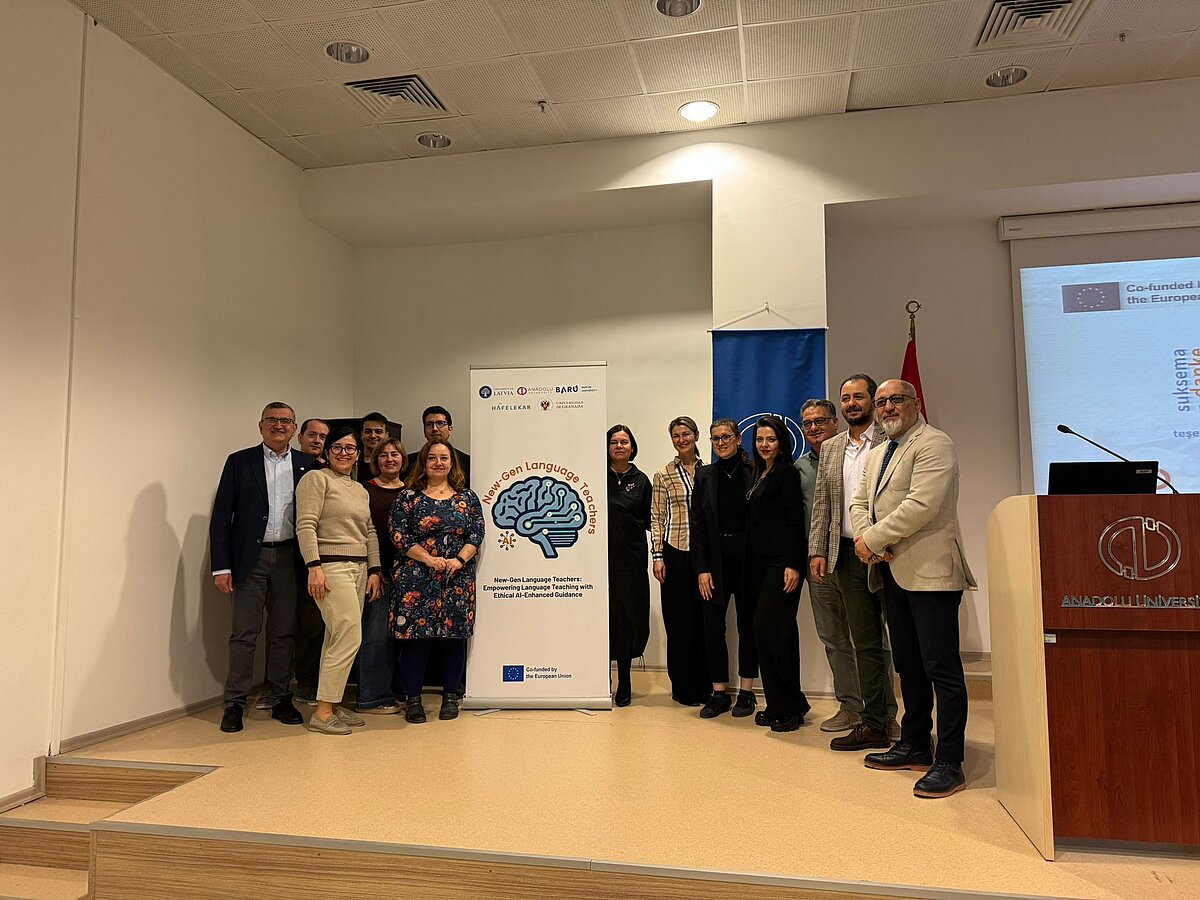
On 23–24 March, Prof. Indra Odiņa and researcher Tatjana Bicjutko represented the University of Latvia at the first Transnational Project Meeting of the Erasmus+ project New-Gen Language Teachers: Empowering Language Teaching with Ethical AI-Enhanced Guidance, hosted by Anadolu University in Eskişehir, Türkiye.
The project is coordinated by the University of Latvia and implemented in cooperation with partner institutions from Türkiye, Spain, and Austria, including Anadolu University and Bartın University (Türkiye), the University of Granada (Spain), and Hafelekar Unternehmensberatung Schober GmbH (Austria). The meeting brought together partners in person for the first time and opened with a formal event at the Faculty of Education, attended by university administration, academic staff, and students.
During the two-day meeting, partners worked intensively on finalising the MOOC design and the learning outcomes matrix. These will guide the development of a modular training offer for language teachers, focusing on the pedagogical and ethical use of artificial intelligence.
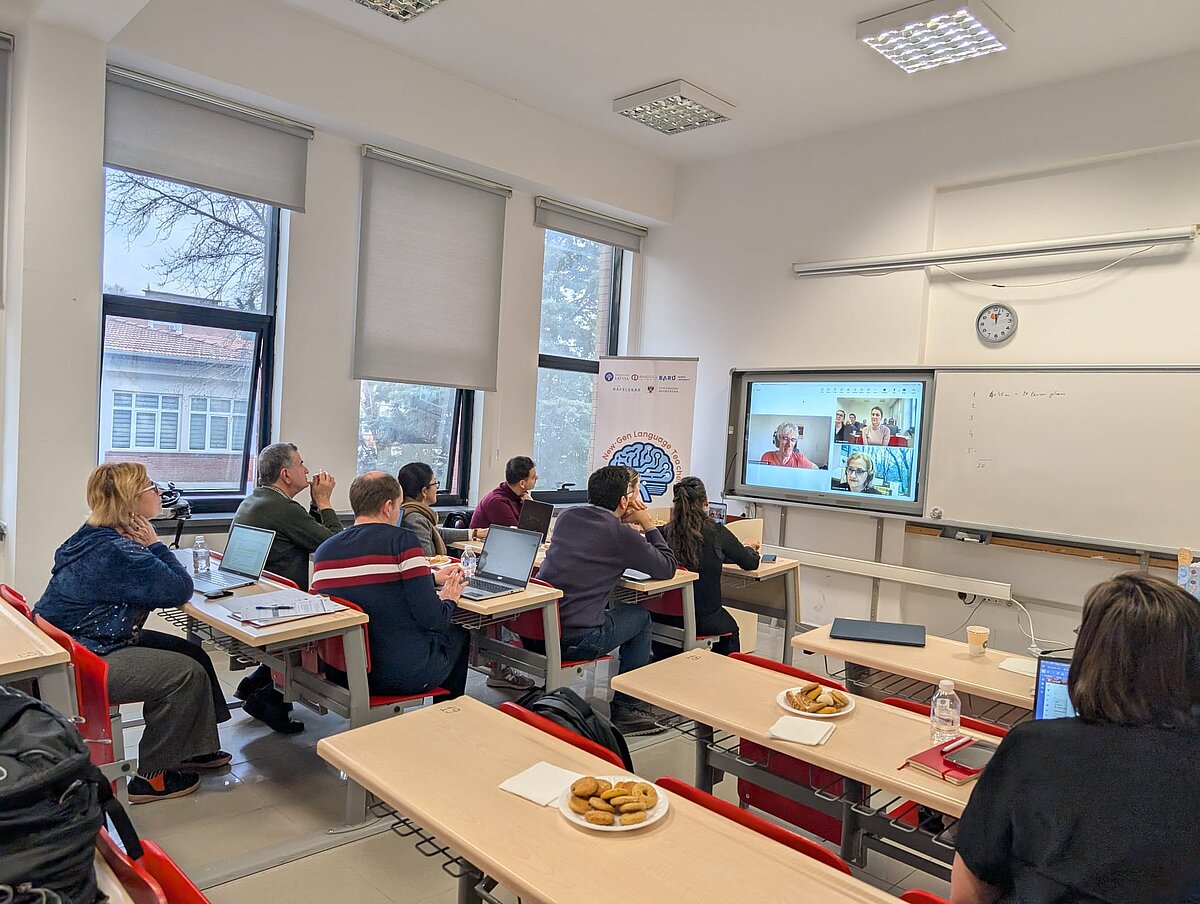
On the second day, the consortium established a virtual exchange with the CLEVER-AI project, another Erasmus+ initiative promoting the responsible integration of generative AI in language education. The exchange enabled both consortia to share approaches and identify opportunities for future collaboration.
Following the meeting, on 25 March, the University of Latvia representatives delivered a seminar, “Teacher Agency and Identity in the Age of AI”, and a workshop, “Teacher Agency and Identity in the Age of AI: Teacher Identity Under Pressure?”. The events brought together an audience of more than 120 students and provided a platform for discussing the role of teachers in technology-rich educational environments.
Further information about the project is available on the New-Gen Language Teachers Project Website
The visit strengthened collaboration among partners and contributed to advancing the shared objective of supporting language teacher education in the context of ethical and pedagogically informed use of artificial intelligence.