
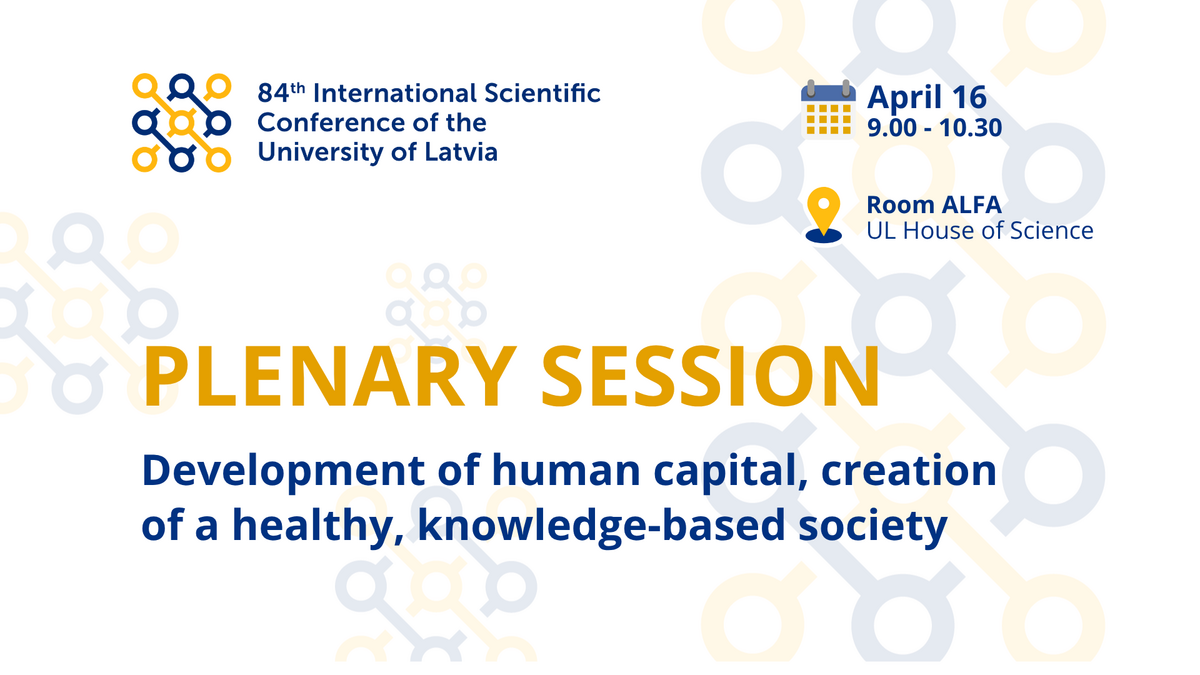
The inaugural conference theme, "Development of Human Capital, Formation of a Healthy and Knowledge-Based Society," represents one of the University's priority research pillars. This theme consolidates diverse research directions from the UL Faculty of Education Sciences and Psychology, the Faculty of Medicine and Life Sciences, and the Faculty of Exact Sciences and Technologies, culminating in nine engaging interdisciplinary sessions.
These sessions facilitate dialogues rooted in the synergy between science and practice. The thematic framework emphasizes societal sustainability and the promotion of multi-faceted human well-being; the significance of an inclusive and equitable society; educational quality and the evolution of the teaching profession within a transforming global landscape; technological innovation across various sectors and the role of language and literature within the contexts of culture and identity.
The plenary session, "Development of Human Capital, Formation of a Healthy and Knowledge-Based Society," highlights critical societal challenges. It addresses topics such as the support provided to educators through educational science research, intergroup prejudice and its influence on human decision-making and behavior, and the impact of design on emotional well-being within globally dispersed learning environments.

Professor Marta Kowalczuk-Walędziak
From research to professional meaning: What educational scholarship owes to teachers.
Marta Kowalczuk-Walędziak is an Associate Professor with a habilitation degree in the field of teacher education at the University of Białystok’s Faculty of Education, where she currently serves as Vice-dean for Research and Internationalisation. From 2018 to 2021, she served as a member of the Administrative Council of the Association for Teacher Education in Europe (ATEE). Marta’s main research interests include: teacher education and teacher professional development; research-informed practice in education; research-teaching nexus in higher education; as well as the internationalisation of secondary school education. Across these areas she has led or co-led ten research-related projects and programmes funded by national and international research agencies, and authored or co-authored journal articles for top-tier publishers around the world. Marta has also authored, co-authored, and edited eight monographs and books, the most recent being The Palgrave Handbook of Teacher Education in Central and Eastern Europe (2023; together with Roza Valeeva, Marija Sablić, and Ian Menter). She has been awarded many prestigious prizes at national and international levels for her research work.

Professor Iiro Jääskeläinen
Neuroimaging subtle intergroup biases and emotions to foster mutual understanding for the benefit of modern societies.
Professor of Systems Neuroscience Iiro Jääskeläinen is a cognitive neuroscientist at Aalto University in Espoo, Finland, where he advances both methodological innovation and substantive research in systems neuroscience. His work uses naturalistic stimuli, such as films and spoken narratives, to probe social cognition, emotion, and decision-making in experimental participants. His research interests bridge neuroscience, the social sciences, and economics, offering interdisciplinary insights into how humans perceive, feel, and make choices.

Dr. Aija Freimane
From Competence to Care: Integrating Qualification Frameworks and Well-Being in Design Studies.
Dr. Aija Freimane is a full-time academic at TU Dublin School of Art and Design, lecturing in design theory, research, and the creative industries. Her work centres on human-centred value creation, design anthropology, sociology, and sustainable social well-being. She specialises in socioeconomic impact, design strategy, and innovation processes. Her postdoctoral research led to the award-winning book Perceived Design Value (A’ Design Award, 2021). Dr Freimane has published widely in indexed journals and led the Design Expert Group for the Erasmus+ Tuning-CALOHEE project, contributing to European design qualification frameworks.
Participation: Free of charge.
Registration for listeners is open until April 11 on the conference website.
The event is taking place within the framework of the 84th International Scientific Conference of the University of Latvia.
More information about the general program, 9 thematic plenary sessions and 52 sections, where 185 poster presentations will be presented, is available at: https://konference84.lu.lv/en/
 is "The University of the Future – Impact-Based Leadership," aiming to underscore the University's pivotal role in knowledge creation, societal development, and the formulation of sustainable solutions.)